


Making yogurt out of Lactobacillus reuteri is really a simple, straightforward process. But some people get tripped up on the details, lamenting the thin, sour, or discolored end-result they obtain.
One of the biggest changes is that I no longer recommend the BioGaia Gastrus product. While it served us well in the beginning, the process is easier with a product that I introduced: MyReuteri that provides 10 or 20 billion CFUs (you have a choice of a 10 or a 20 billion count product)—no more need to crush tablets. We have subjected this strain to both animal and human testing; DNA sequencing is in the works. The contents of one capsule is more than sufficient to get started.
So here is the simple recipe, step-by-step to minimize your potential for making mistakes. I have made >100 batches with not a single failure. You can do this, too.
Why do this? Well, if you are new to this conversation, you will be excited to know that the yogurt is really not about yogurt, as conventional yogurts achieve none of these effects. This “yogurt” fermented with Lactobacillus reuteri achieves effects that include:
- Smoothing of skin wrinkles due to an explosion of dermal collagen
- Restoration of youthful musculature—This is a major health advantage in that it increases metabolic rate, giving you improved control over weight; protection from falls, fractures, frailty. (This is in contrast to the awful GLP-1 agonist drugs that cause significant muscle loss.)
- Accelerated healing
- Reduced appetite, the so-called “anorexigenic” effect—food still tastes good, but you are almost completely indifferent to temptation
- Increased testosterone in men
- Increased libido
- Preservation of bone density—Obtaining L. reuteri is one of the most important steps you can take to prevent osteoporosis
- Deeper sleep—About half the people restoring L. reuteri experience this effect.
- Increased empathy and desire for connectedness with other people
- Probiotic effects that may include prevention of small intestinal bacterial overgrowth, SIBO
The majority of benefits are a result of L. reuteri‘s ability to provoke hypothalamic release of oxytocin, a hormone that is proving to be the key to substantial age-reversingl and health effects. Other benefits derive from this microbe’s ability to colonize the entire length of the small intestine (very unusual) and produce bacteriocins, natural antibiotics effective in killing fecal microbial species such as those that have ascended from the colon in SIBO. (L. reuteri is therefore one of the principal ingredients in my recipe for SIBO Yogurt.)
You will need:
–Glass or ceramic bowl or other vessel large enough to hold at least one quart of liquid
–1-2 tablespoons of inulin
–Starter: 1 capsule of MyReuteri. For subsequent batches, use 2 tablespoons previous batch of L. reuteri yogurt (whey or curds or mixture of both)
–1 quart of half-and-half or other liquid (to make with coconut milk, several additional steps and ingredients are required)
–Some method of maintaining at 100 degrees F
Yields: Around 8 one-half-cup servings
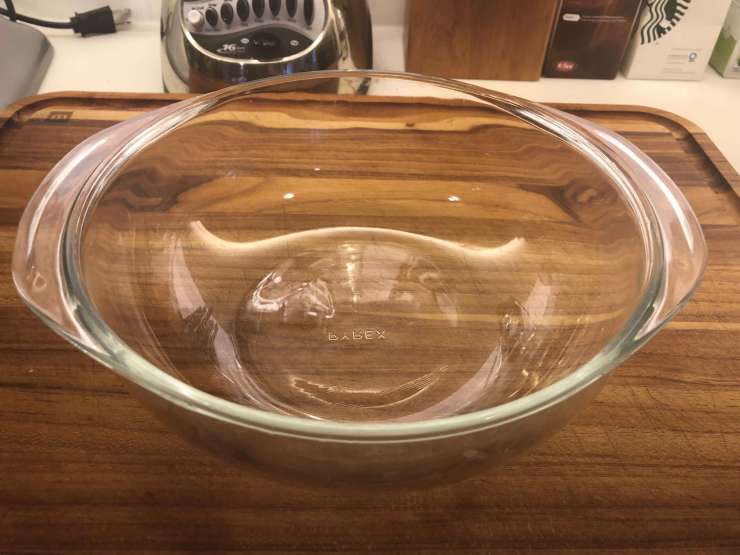
Make sure your bowl and utensils are clean after washing with hot soap and water:
Add 1-2 level tablespoons of inulin:

Open the capsule of MyReuteri and pour into the bowl. Once you have made your first batch, make subsequent batches with two tablespoons of the prior batch, rather than capsule contents; it can be any mixture of whey or solid curds, as both contain L. reuteri.

Add a little, e.g., 2 tablespoons, of your choice of dairy; I used organic half-and-half, as this yields the best texture (and, of course, we NEVER limit fat in my programs). Make a slurry by stirring; this prevents clumping of the prebiotic fiber. (Whole milk—NEVER low- or non-fat—yields a thinner end result, while cream yields something close to butter, too thick for my taste.)

Stir in remainder of half-and-half or other liquid:

Cover lightly with plastic wrap or other means. Ferment by maintaining at 100°F for 36 hours. We use prolonged fermentation—far longer than the 6 or so hours used to produce commercial yogurts—to achieve super-duper high bacterial counts. The addition of prebiotic fiber yields even higher bacterial counts. Our many flow cytometry counts of microbes in the yogurt have revealed that we achieve hundreds of billions of microbes per 1/2-cup (120 ml) serving.
I used a basin-type sous vide device, but you can use a stick sous vide, yogurt maker with adjustable temperature control, or Instant Pot. (Just be careful with the Instant Pot or yogurt makers without adjustable temperature, as they are set to be compatible with conventional yogurt microorganisms that are more heat-tolerant, using temperatures that can kill L. reuteri; if your device heats to 110 degrees F or higher, it will likely kill L. reuteri and you should find an alternative means of heating. If in doubt, turn on your device for 20-30 minutes and measure the temperature reached with a thermometer first before you ruin a batch.) Make sure to keep your materials out of the way of fans, heating/cooling vents, or other sources of air contamination.

The end-result for me is rich, thick, and delicious, better tasting—and with far higher probiotic bacterial counts—than anything you can buy in a store. Once refrigerated, the “yogurt” is so thick that it can stand upright on a plate:

Serve with fresh or frozen berries, grainless granola, squirt of liquid stevia, or your choice of fruit or natural sweetener.


 Eating the Wheat Belly way is rich, varied, and delicious! Get some additional inspiration for wheat/grain-free dinners with these recipes.
This will also sign you up for the Wheat Belly newsletter featuring additional, delicious recipes and the latest information about new developments in the Wheat Belly lifestyle! Enter your name and email to get started!
Eating the Wheat Belly way is rich, varied, and delicious! Get some additional inspiration for wheat/grain-free dinners with these recipes.
This will also sign you up for the Wheat Belly newsletter featuring additional, delicious recipes and the latest information about new developments in the Wheat Belly lifestyle! Enter your name and email to get started! 
Hi Bob,
Can you please advise on this situation?
I am making the yogurt for the first time with BioGaia Gastrus tablets. I bought a yoghurt maker with adjustable time and temperature settings.
My first batch with 6 x 170ml yogurt pots at 100F for 36 hours resulted with 3 of the pots having an unchanged milk substance at the end. The other 3 were very watery with like cottage cheese at the top. One of those pots also completely cracked all the way around, separating the pot in two. Very strange. The pots were not overfilled. At first I thought maybe the temp got too high? But perhaps it was a fault with the pot?
I then bought a Pyrex glass bowl 17cm (1Litre) which just fits in the yogurt maker compartment and decided to test the temp with a bit less than 1L straight milk roughly every 6 hours with the same settings. The results were:
After 6 hours the temp rose to 95.1F,
after 12 hours – 100.9F,
after 24 hours – 106.3F,
after 30 hours – 101.3F,
after 36 hours – 101.3F
Question – I assume the first batch with the small pots killed the bacteria so I should not use it to start another batch?
Question – Is that a safe enough temperature range without risking killing the bacteria? Or should I try and get the temperature lower by doing the next batch with turning down the temp setting by say 1 degree?
Last question – once I get a successful batch (fingers crossed) and then subsequent batches from it, how long can this process goes on for before losing potency and therefore having to start again from tablets?
Look forward to hearing from you. Thank you! – Alistair Burns
Alistair Burns wrote: «My first batch with 6 x 170ml yogurt pots…»
Is this water bath setup?
Is this a cold-start process?
If so, how long does it take for the pots to reach target temp?
I’m trying to assess hot-spot over-temp risk during warm-up.
re: «One of those pots also completely cracked all the way around, separating the pot in two.»
Now that’s new to me. Are these glass pots? In any case, were they tightly capped?
I’ve never made a tightly-capped batch, or even full containers, but have seen evidence of volume increase in my batches, and popped cap & covering reports by others.
The other thing that can crack glass is thermal shock, which seems unlikely, but would also surely kill the batch.
re: «The results were:
After 6 hours the temp rose to 95.1F»
This sounds like a cold-start scenario. It also implies that a 36 hour ferment, for most people, is more like a 35 hour ferment (whereas my re-cooled batches start at final ferment temp at time 0:00).
re: «I assume the first batch with the small pots killed the bacteria so I should not use it to start another batch?»
Yep. Any evidence of batch failure or contamination rules out starter use.
re: «Is that a safe enough temperature range without risking killing the bacteria?»
Yes, unless there are some early warm-up excursions. In my experience, these L.r. strains do fine over 95-107°F. Indeed, the SIBO yogurt blend, which includes Gastrus®, has to be run at 106°F.
re: «…once I get a successful batch (fingers crossed) and then subsequent batches from it, how long can this process goes on for before losing potency and therefore having to start again from tablets?»
Unknown, really, and it’s more about contamination risk than generational fatigue. Dr.D. may personally be at 100 batches using the generational method, whereas I largely avoid the question entirely by relying on starter batches (and making a new starter batch from the last of the prior starter batch, and I’m so far a maximum of a mere 3 generations in doing that).
More success & trouble-shooting tips here.
________
Blog Associate (click for details)
I have made 3 batches and all have come out great…THick, creamy, and taste really good on their own. Made one from the tablets and the subsequent two have been made from the previous batch. Curious to know how one can verify live culture presence/count barring going to a lab and preparing a slide to view under a microscope…
Daniel Cocks wrote: «Curious to know how one can verify live culture presence/count barring going to a lab and preparing a slide to view under a microscope…»
Strictly speaking, we can’t know. Dr.D. has commissioned some studies, but they are too expensive for routine consumer use. People don’t do this for standard home-made yogurts either, and when relying on natural {environmental} microbes for culture, it’s an even larger set of unknowns there.
So we rely on rough assessments, some here.
________
Blog Associate (click for details)
Well, apparently I made L. Reuteri cheese after 34.5hrs of fermentation. I’m saving the whey because obviously there are active cultures in there. I’m not sure what to do with the curds yet, but they don’t taste bad at all. I think next time I’ll keep a closer eye on it. There must be a tipping point where you have made all the reproductions possible to make yogurt, and the cheese-making begins.
Kirwan Fox wrote: «Well, apparently I made L. Reuteri cheese after 34.5hrs of fermentation.»
Starting from tablets? What diary substrate (e.g. H&H), what prebiotic extender, what temperature, and what fermentation device?
Curdy initial batches (from tabs) are pretty common. Some tips here.
re: «I’m saving the whey because obviously there are active cultures in there.»
Yep. Makes great starter, at 1 tbsp/qt. When I get whey, I pour it into an ice cube tray, freeze it, bag it, label it, and use 1 cube/qt, slowly thawed, for future batches.
re: «I’m not sure what to do with the curds yet, but they don’t taste bad at all.»
They are likely fine for consumption, as long as there are no indications otherwise, including hints of process failure (temp too high or too low, odd growths, etc.)
re: «There must be a tipping point where you have made all the reproductions possible to make yogurt, and the cheese-making begins.»
The net reproduction apparently plateaus around hour 40 in the program recipe. It has less to do with repro cycle count than to do with exhaustion of substrate, and zillions of bacteria competing for what’s left. I’ve accidentally run batches to 54 hours with no ill effect in the final product. Some die-off is occuring in longer ferments, but it turns out that these L.r. strains can confer health benefits even when they are dead.
________
Blog Associate (click for details)
Thanks for your reply. I am happy to provide details about the process.
First, I sterilized everything – the whisk, the bowl, and quart Mason jar and lid that I used for fermentation. I used a sous vide stick set to 100F for 36 hrs, an 8qt sauce pan as a water bath, with the quart jar of stuff inside and covered with a rubber lid. I used Horizon Organics HnH because I believe organic dairy is a cleaner product to start with. I crushed 10 BioGaia Gastris tablets well in my mortar and pestle. I used 2 tbsp of Anthony’s Inulin made from Jerusalem Artichoke. I heated the HnH to about 90F in the microwave. I poured a little bit in the quart jar and whisked in the starter and inulin. Then I poured in almost all the rest of the HnH and whisked some more. I put the lid on loosely, and the jar in the warm preheated bath, and left for 34.5 hrs. When I returned the jar was half filled with whey on the bottom, with curds of something on the top half. If you mash it, it is the texture and creamy-ness of cream cheese with a somewhat yogurty pro-biotic flavor. I added some cacao powder, stevia, and nuts and ate some. Delicious, but not yogurt. LOL.
Second time around, I used only whey from the first batch as starter. This time I poured in a bit less because it overflowed a bit the first time, but it still did that again anyway. I started it and ran it while I slept. In the morning after only 8 hrs, the result was same as before – curds on top, whey on the bottom. I decided not to run it further.
So, my results with tablets were the same as my results using whey as starter. It begs the question, if this is common as a first (and second) result, how many generations are necessary before this stuff turns into yogurt?
Kirwan Fox wrote: «Second time around, I used only whey from the first batch as starter.»
How much whey, in how much H&H?
re: «This time I poured in a bit less…»
A bit less what?
re: «…because it overflowed a bit the first time, but it still did that again anyway.»
There does seem to be some increase in volume with these ferments. I use a 5qt pot, vented lid, and never make more than a gallon at a time, so have never had to put up with overflow risk (or lid pop).
re: «In the morning after only 8 hrs, the result was same as before – curds on top, whey on the bottom. I decided not to run it further.»
I’ve never stopped a batch that soon, so can’t guess whether going for 36h would have had a different result.
re: «It begs the question, if this is common as a first (and second) result, how many generations are necessary before this stuff turns into yogurt?»
Two; my 2nd-batch results are very predictable: firm (almost like whipped butter) on top, and a bit thinner (but still stand-up) on the bottom, with only a slight trace of whey not even worth pouring off.
________
Blog Associate (click for details)
Success! Finally, after 4 generations of failure! I am certain the real key to success was pasteurization of the base with the inulin already mixed in there as you stated in your how-to. I am convinced there was unwanted stuff in there causing the problem. I started over from tablets, and pasteurized everything at around 190F for 20 minutes, with the whisk in there. The first time I got the curds and whey, and I was heartbroken, but the second time, using whey as starter, yogurt! Notable also, the second time a whisk was not necessary to mix in starter since I could add the whey to the cooled mix and give it a shake with the lid on. Thanks! Enjoying the terrific yogurt! I slept like a baby last night!
Hello, I have just bought the Bio Gaia Gustrus tablets and all the things to make the yogurt. I am also thinking of buying the Evivo – EVC001 B.Infantis and adding that to the same mix.
Is that safe and ok to do that? Or is it advised not add other microbes to the L. reuteri yogurt mix?
Thank you
Alistair Burns wrote: «I am also thinking of buying the Evivo – EVC001 B.Infantis and adding that to the same mix. Is that safe and ok to do that?»
I’ve seen no data either way, but it’s likely both possible and safe. I routinely make a blend of L.r. Gastrus® and L.c.(Shirota) Yakult® based progurt (but I use separate saved starter for each new batch).
The Gastrus & EVC001 both incubate at the same temperature, and for the same time.
The EVC001 might prefer sucrose or potato starch (glucose polymer) for substrate, so for a blended ferment, I’d be tempted to use a mix of inulin and unmodified potato starch.
You can also make each separately, then mix both for portioning.
I have so far not experimented with using a saved blend as starter, as I don’t have a handle on population drift over generations.
________
Blog Associate (click for details)
Instant Pots can be turned “off” by a just a slight power interruption, along with the Luvele that I use. They are not set and forget devices. Anyway, I may be mistaken, but I believe that dairy does not support pathogens and is safe to consume if it passes the smell and taste test. Where do you think cheese comes from? There are all sorts of things that grow on the surface of cheese, depending on the type or style, and they all add to the flavor profile and texture of the finished product. Cool-down and room temperature will likely only lengthen the time required to get optimal bacterial count in your yogurt.
Bob, is much more qualified than I to give a definitive answer. But until then, I wouldn’t worry about it.
To add to my previous comment: I always re-pasteurize the base in a boiling water sterilized glass fermentation container and then cooled to starting temperature using a wet wrap of heavy paper towel, which applies evaporative cooling to get temp down in a relatively short period of time. I also use a passive infrared thermometer to check the temperatures from pasteurization to fermentation. This virtually eliminates the introduction of foreign opportunistic organisms into the batch. You will still be open to exposure during the introduction of the prior batch product for inoculation, even using a sterilized spoon and mixing cup, but minimally.
Joseph Cyr wrote: «Instant Pots can be turned “off” by a just a slight power interruption, along with the Luvele that I use.»
This, alas, is true of far too many consumer appliances. And being fairly high-power devices, using a cheap UPS to ride out short power interruptions likely isn’t a fix.
I don’t generally bring this up, because my personal set-up is low power (so requires pre-warming, actually re-pasteurization & cool-down, as you do), and the temperature controller I now use (Ranco ETC-111000-000) does recover to the configured state on power resumption.
re: «…I believe that dairy does not support pathogens and is safe to consume if it passes the smell and taste test.»
Retail or raw will happily support additional microbial growth (after all, we’re counting on it). Retail pasteurized dairy is merely not expected to contain any, pre-expiry. Raw dairy arrives with an assortment, and must be pasteurized when used for these 36h yogurts.
re: «Where do you think cheese comes from?»
Carefully controlled conditions, but even aged cheese can get moldy, and dangerously so. Ancestrally, cheese was naturally fermented by random environmental microbes, and occasional failures were expected.
________
Blog Associate (click for details)
Hi Bob, I just purchased an instant pot to make yogurt. I thought I set it and left. When I returned the pot wasn’t on. I think I forgot to press start. The gallon of milk sat from 9:00 to 2:30 in the instant pot. The room temperature is 72. It’s still cooking but now I’m concerned that the 5 1/2 hours before cooking allowed it to grow bacteria and that it could be teeming with bad bacteria after 36 hours. I will keep it in the fridge in case you give the OK to eat it. Thanks.
Jackiemacgirvin wrote: «… I just purchased an instant pot to make yogurt.»
Which exact model?
Did you run a test non-batch consisting of just water, using a separate temperature probe, and on what setting? What temp did it hold?
re: « The gallon of milk sat from 9:00 to 2:30 in the instant pot. The room temperature is 72.»
So it was allowed to warm from fridge temp to room temp over 5½ hours. If the equipment was sterile, that might not be a problem. See my success/failure checklists.
re: «…could be teeming with bad bacteria after 36 hours.»
Is that 36 hours from powering-on, or 36 hours from the original mis-start?
These bacteria are reasonably resilient to common errors. I started my latest batch with the incubator set for Bacillus coagulans GBI-30, 6086, which uses a dramatically higher temp. I didn’t catch it until the brew had hit 117°F several hours later. I quickly dropped it to my target temp, and let it run 36h. It appeared to complete unharmed.
________
Blog Associate (click for details)
Ha! Bob, never mind, lol
I should have read your response to Don Paul. You gave the pics I was looking for! Thank you.
But I am still curious if I need to double the starter if I make a half gallon instead of a quart.
Tom N
Hthomas wrote: «…if I need to double the starter if I make a half gallon instead of a quart.»
That would depend on the form of the starter.
From tablets, yes, but I would suggest not trying to make a first-batch that big.
From saved starter, as thawed ice cubes, I had been using 2 cubes/qt, but now use 1 cube/qt (2/½gal) with the same results.
________
Blog Associate (click for details)
Hi Bob, Tom again,
I wanted to tell you about my experience using the Hamilton Beach Sous Vide. Well, I have decided to abandon the machine. After making five batches and carefully monitoring the temps at various times during each batch I have come to the conclusion that the HB machine does not have a thermostat that is capable of maintaining a reasonable temp range. You said that the ideal temp to maximize L. ruteri production is in the 97-100*F range. Even though HB says the machine can maintain a temp of around 104*F the temps I have been getting have been as high as 110*F. I admit I might be being a bit particular here, but If I am going to go to the trouble of making this “progurt” I too want to maximize the beneficial bacteria. I finally decided to ditch the HB when the temp was consistently hitting 110*F at the 24 hour mark. I know you said that it can survive up to 122*F but I want to maximize the quantity of L. ruteri.
I was wondering if you could post some pics of your setup, as I would very much like to replicate it. You described it earlier but I am a little unsure about how to go about it. Also, It sounds like I would be able to make a half gallon of the progurt instead of just a quart at a time. Since I am making it for two I would like to be able to make a half gallon at a time. The HB machine does not allow me to make enough to keep my wife and I supplied with enough between batches.
One final question/observation: I assume that when I make a double batch (half gallon) I will need to double the amount of starter material. Am I correct in my assumption?
Thank you in advance for your assistance.
Sincerely
Tom N
I started my first batch using Gastros tablets, potato starch, and half&half. I thought my H-B slow cooker with probe would have a lower setting, but it starts at 140F :( …. as a quick fix I remember using a drawer in my waterbed to make yogurt on the farm (raw milk) … so I have the mix under blankets and pillows but it is only 90F. There is a clear film sealing the bowl to eliminate leaks.
From reading all the above comments, I am guessing I will have a watery outcome even at 48 hours, considering the lower temperature. Do you think there will there be enough starter reuteri produced to go to next generation or should I just start over with a better heater solution?
Jon Dinga wrote: «I thought my H-B slow cooker with probe would have a lower setting, but it starts at 140F…»
If your batch was exposed to that, the cultures are dead, and what you’d have left is just hot H&H with potato starch. Glad you tested it, and do a water-only test run on whatever incubation solution you settle on.
re: «…so I have the mix under blankets and pillows but it is only 90F.»
That may be too low, stretch CFU doubling time, and invite opportunistic environmental microbes to grow in it. I don’t have any experience with under-temp batches, so can’t provide a firm answer.
________
Blog Associate (click for details)
Web search the company Luvele. They have a 2 liter laboratory glass 3-temperature machine with 24 hour timer. When the timer expires, just load in another 12 hours. Temps are approx. 97, 100, and 104 degrees F.
I am not finding any slow cooker or yoghurt maker that would have a temperature range around 95F. I do find ones (e.g. Cuisinart programmable slow cooker) that can cook for up to 24 hrs, but then they do not have the temperature settings as low. The one that Dr. is using they do not any longer make these. Anyone knows where/what to buy?
Don Paul wrote: «I am not finding any slow cooker or yoghurt maker that would have a temperature range around 95F.»
As Joseph Cyr points out, you might be happier with a sous vide (either bath or stick). Be sure to first download the user manual and check that it can be set to hold any arbitrary temp between 90°F and 130°F (32-54°C) for at least 12 hours at a time.
90-130? Yep, one strain being explored right now wants 90. Lactobacillus coagulans GBI-30, 6086 might be happiest at 122. So chose a solution with some latitude.
12 hours because you want to get some sleep, and might have day-long obligations of various kinds.
I’m actually not familiar with the pots on the WB Marketplace. Long before that list was stood up, I’d already had a misadventure with a not-so-smart-pot promising a “yogurt” cycle. I was at least able to salvage the stainless steel pot and its vented glass lid.
I now make the progurts directly in the pot (no water bath), using my ad-hoc lightbulb-in-a-cooler rig. I have since abandoned trying to set the temp by bulb wattage, and use a 75W incandescent, controlling the temp with a US$80 Ranco ETC-111000-000 Prewired Digital Temperature Controller, which can be set to -30°F to 220°F ±1°F.
Note that as implemented, this rig can’t cold-start, which is not an issue in my personal process, but might be in yours.
________
Blog Associate (click for details)
Hi Bob,
I wanted to go over a couple of things:
I bought the Hamilton Beach machine featured in the equipment area. I was concerned when owner’s manual says the lowest temp is 40*C (104*f). However, I figured I would give it a try and monitor the temp over the course of the 36 hours. I read that temps above 104*F would not be good for L. Reuteri. During the first 20 hours or so the temp stayed at 104.6. However, when the 36 hours ended I took a final reading and the probe hit 107* but immediately dropped to 106.4*. I dont know how long the temp was at 106/107 during the last 16 hours. My question is this: how significant is 107*F? I am willing to spend more money on a machine that has the ability to maintain a lower temp but did the higher reading of 107* ruin the batch. The batch turned out very nice and creamy and it tastes good. My concern is if the higher temp killed the L. Reuteri that I wanted?
Thank you in advance for your comments.
Tom
Hthomas wrote: «I bought the Hamilton Beach machine featured in the equipment area.»
That would be the H-B 33970?
re: «…when owner’s manual says the lowest temp is 40*C (104*f).»
I’m asking for the model number because the downloadable PDF for the 33970 doesn’t appear to document what temperature range it covers. I personally have no experience with any sous vide, and instead use a lightbulb in a cooler with a thermostatic probe controller to cycle the bulb.
re: «I read that temps above 104*F would not be good for L. Reuteri.»
Peak reproduction temp is reportedly 97°F, and that’s what I use when just making L.reut progurt. We have folks making blends that include L.reut, at temps up to 106°F.
re: «…did the higher reading of 107* ruin the batch. The batch turned out very nice and creamy and it tastes good.»
107°F is likely not a big problem. L.reut reportedly croaks at 122°F. The cooler rig at my house replaced what turned out to be a not-so-smart-pot in which the basically undocumented “yogurt” cycle ran at 100-115°F; that’s too hot for ideal L.reut results, but still not fatal.
Save any whey fraction, or a portion of the completed progurt, and use it as starter next time. If the result is similar, you may not need to replace the gizmo.
________
Blog Associate (click for details)
Hello all,
I started my first batch tonight. I read the previous comments and did not see anything that indicated if the base mix and the water in the sous vide should be heated before starting the 36 hour countdown. Any thoughts on this. I was wondering if I need to increase the ferment time if I start the process with a cold base mixture.
Thanks, Tom
Hthomas wrote: «…if the base mix and the water in the sous vide should be heated before starting the 36 hour countdown.»
You might be the first person to ask that question. None of the official recipes or other discussions differentiate between cold-start and warm-start. Chances are that most people are doing cold-start, excepting those using raw milk, which must be pasteurized, then cooled — so probably warm-start in that case.
Whether or not to even bother with a time adjustment might come down to just how fast your process reaches optimal ferment temp. If minutes, don’t bother. If an hour, add an hour.
For devices that directly heat the fermentation vessels, and heat quickly, another consideration is avoiding hot spots near the heating elements. Doing a warm-start might mitigate any risk there. This is typically not an issue with a sous vide.
In my personal process, my incubator can’t cold start, and due to having used fresh goat milk, I just got into the habit of [re]pasteurizing, and cooling to final temp. I run it for 36 hours (or more), regardless.
________
Blog Associate (click for details)
I am wondering how many, if any, net carbs are in my reuteri yoguet made with half-n-half. Does the tart taste tell me that all the sugar has been eaten up by the bacteria during the fermenting process? and that there are no net carbs? I would love that!
rbuchmann wrote: «I am wondering how many, if any, net carbs are in my reuteri yoguet made with half-n-half.»
Here are my guesses for net carbs in ½ cup:
Macro ½c Amt % RemarksFat 14.7g 12.1% started with 14.0 g
Sat. Fat 8.9g 7.4% started with 8.5 g
Trans Fat 0g 0% -
Sodium 50mg -% in case anyone cares
Total Carb 3g 2.5% started with 5 g (4.1%)
Dietary Fiber 2g 1.7% started with 0g; presumes some inulin left
Net Carb 1g 0.8% presumes lactose gone
Protein 3.5g 2.9% presumes unchanged,
which meets n.c. targets even for a full cup,
re: «Does the tart taste tell me that all the sugar has been eaten up by the bacteria during the fermenting process?»
It’s a strong clue. If you have a BG meter, you can confirm it with an FBG pre-portion, and a PPBG at 30-60 min. after start of portion.
________
Blog Associate (click for details)
Making my first batch. Unfortunately I just realized that 36 hrs will end at 2;30am! The stick souse vide should keep it at 100 degrees, but should I get up and put the “yogurt” in the refrigerator ?
Thanks!
traincop44 wrote: «Making my first batch. Unfortunately I just realized that 36 hrs will end at 2;30am!»
I used to routinely run my batches to 48h, and sometimes unintentionally to 54h.
re: «The stick souse vide should keep it at 100 degrees, but should I get up and put the “yogurt” in the refrigerator ?»
If you let it run, make sure the temp will be sustained until you can get to it. If it were my batch, and I happened to get up in the night, I’d don the blue-blockers, and chuck it in the fridge. Otherwise, waiting until morning works.
First batches tend to not be super homogenous, so if it’s curdy with a fair amount of watery whey fraction, don’t blame the run time.
________
Blog Associate (click for details)
I make kefir all the time simply by leaving the grains and fresh cold full fat milk mixture in a glass jar and on my counter for 24-36 hours. Obviously my house it typically a lower temp than 100 but would this ‘yogurt’ recipe ferment correctly at a lower temp if left out longer than 36 hours?
MichV wrote: «…leaving the grains and fresh cold full fat milk mixture in a glass jar and on my counter for 24-36 hours. Obviously my house it typically a lower temp than 100 but would this ‘yogurt’ recipe ferment correctly at a lower temp if left out longer than 36 hours?»
Kefir grains have sort-of self-selected over the eons to work at room temp.
Now I’m no expert on fermented foods, but here’s my concern with doing that for any of the program progurts: the species and strains used have peak reproduction temps in the 95-125°F range (varies by microbe). Growth falls off below the optimal temp. And, we are using an unusually long incubation time for a ‘yogurt’. This may give opportunistic environmental microbes an enhanced chance of messing things up…
…particularly if you run the ferment even longer to compensate for the reduced growth rate of the target bacteria.
For anyone who owns a cooler, two pots, a jar, and a thermometer, it would be zero cost to set up a passive rig that could deliver 95-105°F for L.reuteri. Use tap water to fill one pot to 105. Set in cooler. Close cooler. Replace with second pot when first declines to 95.
________
Blog Associate (click for details)
Do you think that a non-contact thermometer, as in one used to measure body temperature, could be used to check the yogurt base temperature during the cooling process after pasteurization? I use a clear glass container in my Luvele adjustable yogurt machine. This would definitely reduce the possibility of external contamination during this very vulnerable period.
Cooling process tip: I use wet paper towels wrapped around the glass fermentation vessel to aid in the cooling process. So far, this system has worked quite well for me.
Joseph Cyr wrote: «…non-contact thermometer, as in one used to measure body temperature, could be used to check the yogurt base temperature during the cooling process after pasteurization?»
Sorry; I don’t know, never having used one (and also not being familiar with their principles of operation, I don’t even have decent guess).
________
Blog Associate (click for details)
Has any research been done regarding when the best time is to consume the L. reuteri yogurt? Empty stomach, before, with or after meals? The reason I ask is that I believe that the stomach’s digestion will destroy most of the beneficial bacteria that we have worked so hard to create, correct? Do more survive if diluted with other foods or certain other foods?
Joseph Cyr wrote: «…best time is to consume the L. reuteri yogurt?»
As a default insight on that, neither the carton nor the insert sheet for Biogaia® Gastrus® say anything at all as regards timing, in labeled use. You’d have to dig into a lot of the published data to see what any clinical studies did.
re: «… believe that the stomach’s digestion will destroy most of the beneficial bacteria that we have worked so hard to create…»
That would be a legit concern if the benefits were strictly due to bacteria activity in the colon, but the full spectrum of benefits for these strains doesn’t appear to rely solely on that. Consider also:
which isn’t going to be impaired by digestive mechanisms
which is likely to be chiefly beneficial in the upper GI tract
such as SCFAs, which work their intestinal benefits everywhere
Effects reported often vanish within a few days to a week after discontinuing these ‘progurts’. This suggests that at our current state of knowledge, we aren’t yet obtaining persistent re-establishment of these ancestral comensals no matter how we consume them. We await further developments on this.
If you dig into the papers, you also are unlikely to encounter any studies that used CFU portion sizes as high as provided in a typical serving of a program progurt. Sheer volume alone may ensure that many viable microbes make it down to the colon.
And if you follow papers, be aware that the taxonomy of Lactobacillus changed in mid-2020. Going forward, Lactobacillus reuteri is going to be reported as Limosilactobacillus reuteri, and it’s not the only strain affected by this.
________
Blog Associate (click for details)
I didn’t have much potato starch. So I mixed five crushed tablets with (barely) a tablespoon of potato starch.
Do you think this was enough potato starch? Will the yoghurt turn out okay?
Juan Gómez wrote: «… So I mixed five crushed tablets with (barely) a tablespoon of potato starch. …»
How much dairy substrate (half&half) did you use?
The recipe scales, so using only 5 tablets would normally suggest starting with a pint of H&H, not a quart.
Using less starter, and less prebiotic fiber may result in a thinner first batch. It’s not something with which I’ve experimented.
In any case, the batch should be suitable for use a starter for the next batch.
________
Blog Associate (click for details)
Hello,
Can corn starch (sold under the Maizena brand) be used as prebiotic fiber instead of potato starch or inulin?
Nicolás Colla wrote: «Can corn starch … be used as prebiotic fiber instead of potato starch or inulin?»
No. It contains the adverse protein zein (a functional analog of wheat gliadin {in gluten}).
Unless organic, it will also have pesticide uptake. Unless non-GMO, it may be a pesticide (Bt toxin), with these latter two problems making it exactly the opposite of what you want in a microbial fermentation substrate.
re: «…Maizena…»
That brand may further contain sulfur dioxide, a preservative (so yet another antagonist to fermentation).
________
Blog Associate (click for details)
Thank you very much for the quick response!
So I understand that we should use organic potato starch only.
Regarding the milk, I plan to use the brand Puleva Eco, which is classified as “ecological” and has the EU “eco” label. According to the brand, the milk of all cows that need an antibiotic treatment is automatically discarded from the batches. Do you think this is safe enough to use? Or is there anything else one should look for in order to avoid killing the bacteria?
Nicolás Colla wrote: «So I understand that we should use organic potato starch only.»
Not necessarily. I use only inulin in my progurts, finding unmodified potato starch to not provide a consistency I like.
re: «According to the brand, the milk of all cows that need an antibiotic treatment is automatically discarded from the batches. Do you think this is safe enough to use?»
How much antibiotic (AB) remains in the final milk is an interesting question, both for the ferment, and for consumption of the final progurt. Using an AB-free product is of course ideal.
________
Blog Associate (click for details)
Can I use FOS powder for the prebiotic?
Kimberly Guay wrote: «Can I use FOS powder for the prebiotic?»
I wouldn’t hesitate to use it if I were out of ordinary inulin. It is apt to be more expensive than inulin, particularly if it’s NutraFlora® FOS.
________
Blog Associate (click for details)
I recently made my first batch of L.reuteri yogurt using the exact recipe by Dr. Davis. It turned out perfect! Just made second batch and it turned out very lumpy and creamy, though it still tastes good. The only thing I did differently was I used previously frozen half and half (I bought quality half and half from Whole foods without any additives and thus had a short expiration time). I thought it was completely thawed when I mixed it though there were some solids in the bottle after I poured it into the bowl. I also still used the gastrus tabs as a starter since I ate all of the other batch! Any ideas on what happened with this? Can I still eat this? It’s not very appetizing but I thought I might use it for cooking/dressings calling for yogurt
nmpa wrote: «Just made second batch and it turned out very lumpy and creamy, though it still tastes good.»
That’s actually pretty common for batches made from tablets. More tips.
re: «…since I ate all of the other batch!»
Fill an ice cube tray with it. Freeze it. Bag it. Use 1 or 2 cubes/quart, slowly thawed, as starter.
My personal process involves {re}pasteurizing the dairy, with the inulin mixed in. I would actually consider using expired dairy via this method.
________
Blog Associate (click for details)
I just tried making this. There was a lot of whey. And the curds were fairly granular and not smooth. . Is this normal?
My sous vide is a basin type is holding at just a nudge below 102°. I can’t get it lower. I’m looking for other alternatives.
Looking for tips and advice.
Kasommer wrote: «I just tried making this. There was a lot of whey. And the curds were fairly granular and not smooth. . Is this normal?»
It’s normal for a first batch, started from Biogaia® Gastrus® tablets. See tips here.
re: «My sous vide is a basin type is holding at just a nudge below 102°. I can’t get it lower.»
I would not expect that to be a big problem. I consider staying in the 95-105°F range to be safe for the strains of L.reuteri we use.
________
Blog Associate (click for details)
How do I create the second d/subsequent batches off of the first batch?
Andrea D’Amico wrote: «How do I create the second d/subsequent batches off of the first batch?»
There are two general approaches:
1. Generational
Use 1 tbsp. (15 mL) of saved yogurt from the prior batch, per quart or litre of yogurt.
2. Dedicated
Save off any drained whey fraction, or a saved portion of an initial batch. Freeze it in an ice cube mold. Slowly thaw 1 or 2 cubes per litre or quart.
I use method #2, and thaw the cubes by placing them in sealed container, in the refrigerator, 8-12 hour before making the next batch.
________
Blog Associate (click for details)
Hi Bob. Ran into a problem with the yogurt and would appreciate your advice.
The first time I made it, used the modified recipe on the Luvele yogurt maker website and it worked great. But this time I wanted to try the original recipe.
I mixed 2 tablespoons of NOW inulin with 10 crushed tablets of Gastrus. Mixed those into about a 1/4 cup of organic half and half to make the slurry, then poured in the rest of the quart. Put the Jar in the luvele yogurt maker at 100 degrees for 36 hours.
I got a hard cake with a lot of whey underneath. The cake looked like cottage cheese but even more crumbly and tasted like cheese (thankfully there was no mold, discoloration, etc.).
I tried using a 1/4 cup of that whey and made a second batch, this time setting the machine at 97 degrees. 12 hours later, the same cake had formed but I kept it incubating for the full 36 hours. When I opened the jar, it looked just like the first batch except it tasted more tangy, with a bit of an alcohol tang like kombucha.
Do you think I over-incubated or would this result be due to contamination? (I sterilized all materials in my instant pot beforehand but contamination is always possible).
The only things I did differently from my first attempt is mixing the inulin with the gastrus BEFORE adding any liquid (I normally make the inulin slurry before I add the gastrus to it) and incubating at 100 instead of 97.
Lastly, would this “cottage cheese” product be safe to eat? I’m not too concerned with taste and texture… just the l. reuteri benefits. Thanks!
jaybird8521 wrote: «I got a hard cake with a lot of whey underneath. The cake looked like cottage cheese but even more crumbly and tasted like cheese (thankfully there was no mold, discoloration, etc.).»
That’s common for initial batches started from retail probiotic. I pour off the whey fraction, and save it in ice cube form for use as starter. I may even treat the whole initial batch as starter.
re: «I tried using a 1/4 cup of that whey and made a second batch, this time setting the machine at 97 degrees. 12 hours later, the same cake had formed but I kept it incubating for the full 36 hours. When I opened the jar, it looked just like the first batch except it tasted more tangy, with a bit of an alcohol tang like kombucha.»
That’s not expected — not the stratification or the alcohol aroma. Fungi & yeast ferment to alcohol; bacteria don’t.
re: «Do you think I over-incubated…»
Doubtful. I routinely incubate to 48 hours for convenience. Also, 97 vs. 100°F makes no difference in my experience. I don’t get concerned about the temp (for L.reuteri) unless the temp goes outside the range 95-105°F.
re: «…would this result be due to contamination?»
Possibly, but that normally results in much more obvious growths and/or discolorations. Opportunistic airbornes typically just show up as surface colonies. One tip to avoid them is to shut down any diffusers, humidifiers, and maybe even heating/cooling air handling during prep.
As mentioned in some of the older comments above, I further seek sterility by re-pasteurizing the H&H, with the inulin and the whisk in the final ferment pot, covered, then re-cooled to 105°F for adding the starter.
re: «…would this “cottage cheese” product be safe to eat?…»
I would have no way to guess. I treat first-batch-curds as consumable in my own prep, but none have done what you’re describing (nor has anyone else reported the alcohol aroma).
________
Blog Associate (click for details)
Thanks, Bob. I’ll try heating the H&H and see if that helps.
Hi Bob. As you suggested, I believe I have a yeast problem. Interestingly enough, these bad batches didn’t start until after I started making bread in my kitchen a few weeks back.
Typically, by 12 hours in, I’ll see the stratification and know the batch is no good. Yesterday’s batch looked fine 12 hours (just a solid mass with liquid underneath) in but by 24 hours, the bad signs were there again (lots of curds, bubbles in the whey and a faint yeasty smell). Subsequent batches made with the whey are even worse, and create a syrupy, bubbly whey that smells like alcohol.
I started re-pasturing with the inulin in the pot, then only stirring with utensils that were cleaned and re-dipped in boiling water before they come into contact with the milk. Im crushing the pills in the blister packs. I clean my luvelle yogurt cleaner (lid and base) before starting and then I don’t use kitchen for a day once the machine is turned on.
Is airborne yeast a possibility? The only other thing I can think of is that the luvelle is over-heating the substrate even though I set it to 97 deg.
Also, even though I’m only making a quart at a time, there are some gasses that get released which pop off the cover on the luvelle jar every few hours. I’ve just been leaving it the way it is (instead of refastening it) but maybe that loose top is allowing yeast to get in there? I’m pulling my hair out over this.
If I can’t solve this issue, is coconut milk less likely to be contaminated by yeast? Or would I most likely have the same problem with the other recipe?
jaybird8521 wrote: «…I believe I have a yeast problem. Interestingly enough, these bad batches didn’t start until after I started making bread in my kitchen a few weeks back.»
What recipe is that bread? There are as yet no canonical yeast bread recipes in the program, but it is thought to be possible.
re: «…(lots of curds, bubbles in the whey and a faint yeasty smell). Subsequent batches made with the whey are even worse, and create a syrupy, bubbly whey that smells like alcohol.»
Sure sounds like some unauthorized yeast. Beergurt.
re: «I started re-pasturing with the inulin in the pot, then only stirring with utensils that were cleaned and re-dipped in boiling water before they come into contact with the milk.»
I just leave the whisk in the pot during re-pasteurization and cool-down.
re: «…and then I don’t use kitchen for a day once the machine is turned on.»
If everything is covered, that seems a bit overkill. I’ll make sure the diffuser is off, but that’s about it for air handling. Of course the humidity is generally low here in KS. I rarely get contamination with my current setup — loosely covered pot in a cooler with the lid closed.
re: «Is airborne yeast a possibility?»
Sure, among other airborne opportunists.
re: «The only other thing I can think of is that the luvelle is over-heating the substrate even though I set it to 97 deg.»
If you are doing warm-start, or water bath, that would surprise me. But with any thermostatically controlled device, some thought needs to be given to what stands between the heating elements, the recipe ingredients, and where the temperature sensor is.
On the not-so-smart pot I originally bought for this application, the metal pot was in direct contact with the outer heating rings, and the sensor was dead center. Hot spots were likely. On the warm-start rig I use now, the driving temp (air heated by a 75W bulb) is never more than 2°F higher than the target temp.
re: «Also, even though I’m only making a quart at a time, there are some gasses that get released which pop off the cover on the luvelle jar every few hours.»
I use a vented pot lid, so have no direct experience with out-gassing, but it seems likely. Also, volume does seem to increase, so completely filling pots and jars is an independent issue. If I switch to fermenting directly in the Ball® jars, I would use plastic lids, not fully tightened.
re: «…is coconut milk less likely to be contaminated by yeast?»
The non-dairy recipes so far appear to be even more challenging than dairy, due to the source substrate wanting to stratify, and the need to provide something for the lactose role. In the specific case of coconut, the fats tend to be anti-microbial (we keep our open oils at room temp), so this property is both your aide on yeast, but not your pal on ferment time, nor on being able to use saved yogurt as starter.
________
Blog Associate (click for details)
I just posted below but this is sounding like what I just ended up with.
Now to add to that I had made a mixed yogurt with this same setup before and had no issues. Very creamy and smooth. Very little whet. But for that I used a different l reuteri strain not realizing the biogaia brand was specific.
I set temperature to 100 degrees. I will try the inulin, when the container is filled with a double batch it’s about 5-6 inches high with about inch and half to top which is vented.
I will try the inulin. Thank you!
I have th Luvele yogurt maker with 2 litre jar and would love to fill it up.
Regular recipe calls for 1qt. of h&h, 2 Tbl raw potato starch, 2 Tbl of previous batch of yogurt.
I have doubled the recipe, 2qts. of h&h, 4 Tbl of raw potato starch and 4 Tbl of previous batch of yogurt.
Kept it in the yogurt maker (luvele) 36 hours!
Any suggestions are greatly appreciated. Thank you!
Nancy Walzer wrote: «I have th Luvele yogurt maker…»
What temperature does it run at (or that you are setting it to)?
re: «…with 2 litre jar and would love to fill it up.»
In my experience, the recipes scale up and down, up to a gallon at least. More than about 10 inches deep might introduce issues.
re: «Regular recipe calls for 1qt. of h&h, 2 Tbl raw potato starch, 2 Tbl of previous batch of yogurt.»
I haven’t used unmodified potato starch in some time, because I found it to congeal on the bottom. I use inulin only anymore (and do other things differently, as noted at previous link). The PS may or may not explain your crust.
________
Blog Associate (click for details)
Can the L.reuteri recipe above be doubled? I have th Luvele yogurt maker with 2 litre jar and would love to fill it up. I’m assuming (bad ifea) that I would double the starter and potato starch? How about cook time?
Could this yogurt be stored in air tight Tupperware container?
Any help would be appreciated! Thank you.
Nancy Walzer wrote: «Can the L.reuteri recipe above be doubled?»
The recipes all scale linearly, up and and down, although I don’t think we have any reports for more than a gallon as a single container. If you double the substrate, double the starter and the prebiotic fiber.
re: «I have th Luvele yogurt maker with 2 litre jar and would love to fill it up.»
Based on reports, don’t completely fill the jar, and don’t tightly cap it. The ferment is apparently expansive to some degree. I use an oversize pot with vented lid, so have no exact metrics on this.
re: «I’m assuming (bad ifea) that I would double the starter and potato starch?»
No problem. I just use inulin anymore, as I have clumping problems with potato starch.
re: «How about cook time?»
No change.
re: «Could this yogurt be stored in air tight Tupperware container?»
Yes. At the completion of ferment, I transfer my progurts to Ball® jars, with lids slightly tight.
________
Blog Associate (click for details)
Thank you!
Hi Bob, thanks for the info! I have made a double batch twice now and both times a crust formed on the bottom. Now this normal? Other than that the yogurt came out great.
Thank you!
Nancy Walzer wrote: «I have made a double batch twice now and both times a crust formed on the bottom. Now this normal?»
No, that’s not normal. I never see anything like that with any of the recipes in my process.
What device and container(s) are you using? If fermenting in a smart-pot type device, directly in the pot, and in particular if doing a cold start, what you may be seeing is overheating in the pot base near the heating elements.
If so, a couple of things might be done to reduce or eliminate the problem.
________
Blog Associate (click for details)
My first attempt at making this yogurt ended up a failure as I grew pink mold on the top surface. Scrape off the mold, and the texture/color of the yogurt underneath was very good. However, the mold ruins the batch. Here are the possibile things that could have caused the demise, please let me know what think and if you can think of anything else:
1. Contamination – the most obvious. Everything used to make the batch was clean but not strictly sterilized. Next time, I plan on boiling everything for at least 15 minutes. The only issue is the mortar and pestle, which I worry is just too porous, even for sterlization. I was thinking the next time I would use the plastic bag/rolling pin technique. Please let me know if you have any other methods that work for you.
2. Not enough starter for the amount of UP half-n-half/time. I wanted to do a 1/2 gallon and had consulted various sources online that had made this yogurt, who recommended that I didn’t need to use as much tabs and inulin in scaling up. I only used 15 tabs and 3 Tbsp inulin. So, it is possible that I just didn’t have enough starter to keep it going for 36 hours. I have also seen where others only do 24 hours for this yogurt. Any thoughts on that?
3. Stainless steel – what is the issue with stainless steel? I used a SS fork to mix the powders and make the “roux” in a ceramic bowl. Then, I poured this roux directly in the SS liner of an Instant Pot and used a stainless steel wisk to combine. The batch was fermented directly in the SS instant pot liner. (Note: I tested the instant pot temp and it holds consistently around 104-degrees F)
Stephanie Green wrote: «My first attempt at making this yogurt ended up a failure as I grew pink mold on the top surface.»
There are a number of suspects for that, and you’re addressing several. Be sure to shut off any humidifiers or other vaporizers during prep.
re: «Next time, I plan on boiling everything for at least 15 minutes.»
My practice is to {re}pasteurize the substrate+inulin, in the fermenting vessel, whisk-in, for 180+°F for 10-20 minutes, then re-cool to just above fermentation temp for adding starter.
re: «The only issue is the mortar and pestle, which I worry is just too porous, even for sterlization.»
For a nogurt based on Biogaia® Gastrus®, some people simply smash the tablets while still in the blister pack, using a flat-faced mallet. For a ceramic or rock M&P, it should be possible to bake the M&P in an oven, then cool it on a rack before use.
re: «Not enough starter for the amount of UP half-n-half/time. I wanted to do a 1/2 gallon…»
Everything scales linearly, up to a gallon or so for a single fermenting container. But when I (rarely) have to start over from probiotic, I now make just a quart, and treat most of if as starter (frozen as cubes, slowly thawed for use) for the “real” batches to follow. Initial batches from tablets tend to be curdy, stratified, and have lots of liquid whey fraction. I wouldn’t want to make a lot of that at once.
re: «So, it is possible that I just didn’t have enough starter to keep it going for 36 hours. I have also seen where others only do 24 hours for this yogurt.»
The inverse. Less starter means you need to run longer. I routinely run all my batches to 48 hours, primarily for scheduling convenience. With the various microbes we’re so far using, 24h is apt to be unsatisfactory no matter how started.
re: «Stainless steel – what is the issue with stainless steel?»
None that I know of. I use an SS pot for {re}pasteurization & ferment, an SS whisk, and an SS thermometer probe. The whisk does need careful sterilization post-blending, due to the ample crevasses where the wires enter the handle.
________
Blog Associate (click for details)
Thanks so much Bob. Your guidance is immensly helpful. A couple of thoughts/questions…
1. It is in the vicinity of an electric kettle that gets used several times a day to boil water up for tea. So, probably should move it away from that.
2. You repasturize even if you are using ultra-pasturized substrate? If so, what is your reasoning? To avoid the issue I had?
3. During repasturization, do you whisk the inulin into the substrate prior to heating or when it gets up to temperature? It looks like you leave the whisk in the bowl? Do you whisk throughout the repasturization process?
4. I can only set my yogurt setting on my Instant Pot to 104-degrees with the custom setting (there is also 91 degrees for the low setting but that is too low and the medium setting is 107-degrees.) Is 104-degrees F OK from your experience?
I hear you about the 48-hour protocol. I got excited to try this first batch after work and then realized that 36 hours would be over at 3:30am. Very disappointing to get up in the middle of the night to pink mold!
Stephanie Green wrote: «It is in the vicinity of an electric kettle that gets used several times a day to boil water up for tea.»
That’s boiled water, which I wouldn’t consider a risk. The atomizers tend to be cold ultrasonic, which may not shatter all microbes.
re: «You repasturize even if you are using ultra-pasturized substrate? If so, what is your reasoning?»
Several reasons:
• My incubator can’t cold-start, so I have to at least pre-heat.
• It sterilizes the pot, whisk & inulin.
• It causes the inulin to disperse more evenly.
• It denatures some of the milk proteins.
re: «During repasturization, do you whisk the inulin into the substrate prior to heating or when it gets up to temperature?»
I whisk before re-past and during re-cool, but not during heating. It takes several minutes to re-cool, so it gets mixed well.
re: «Is 104-degrees F OK from your experience?»
That’s likely fine for the L.reuteri & L.casei, but may be too low for the B.coagulans
re: «I hear you about the 48-hour protocol.»
Even so, you still have to check the calendar for conflicts.
________
Blog Associate (click for details)
I’ve always mixed the crushed tablets with cooled half and half then added the inulin. Am I correct in understanding that I can actually add the inulin to the half and half as I am heating it to 180 degrees then add the starter/tablets to the cooles H&H/inulin combo?
David wrote: «I’ve always mixed the crushed tablets with cooled half and half then added the inulin.»
That’s the official recipe.
re: «Am I correct in understanding that I can actually add the inulin to the half and half as I am heating it to 180 degrees then add the starter/tablets to the cooles H&H/inulin combo?»
It’s an option (as is re-pasteurization, if that’s what you are doing). Doing a re-past with the inulin mixed in, and the whisk in the pot, is what I do. This has the benefits of enhanced sterility, and possible further denaturing of casein and whey. When starting from tablets (which I rarely need to do) I would pull off some of the cooled mix and make a slurry.
________
Blog Associate (click for details)
Thank you for directing me to that post from last month. Being well beyond child-bearing age, I think I’ll just keep full L reuteri yogurt and a full regular yogurt available at all times and consume both daily… I do love my greek style yogurt so no problem with consuming both daily. I love it plain, on soups, vegetables, etc., and will assume that with the incubation of 36 hours, carbs are at a minimum in both.
First batch made -quart of whole milk, 10 tablets, 2 T inulin, 36-37 hours. Is certainly tart, but not that much more tart than my usual yogurt incubated for 24 hours. It’s a different kind of tart though, more ‘sour’ tasting for lack of a better word. Not bad, just different. Hoping I’ll get used to it and learn to love it. Not there yet as I really love my previous yogurt.
Was wondering, thinking of my usual yogurt, if there are benefits to the usual ‘probiotics’ in yogurt and if my regular yogurt whey can be combined with the L reuteri yogurt whey when making another batch? Would the dilution of L reuteri with the ‘regular’ whey result in less or minimal L reuteri benefit?
Cindy wrote: «It’s a different kind of tart though, more ‘sour’ tasting for lack of a better word.»
Add at serving time: blueberries or other low net carb fruit; safe sweetener (stevia, monk fruit, erythritol, xylitol, perhaps allulose).
re: «…if there are benefits to the usual ‘probiotics’ in yogurt…»
Yes. That’s probably why they are a traditional human food.
re: «…and if my regular yogurt whey can be combined with the L reuteri yogurt whey when making another batch?»
With some care. See on the blog last month: L reuteri and oxytocin . . . for everybody?
________
Blog Associate (click for details)
Yeah, I think you are right in that FB membership is required. At least with the WB membership, users can still comment here on the blog – I hope. Thanks Bob.
Richard wrote: «At least with the WB membership, users can still comment here on the blog — I hope.»
If it’s open for comments, and you can see it, you can comment. Posts have been closing to comments (by anyone other than admins and moderators) after 14 days in recent years. I’m not aware of any changes pending relative to that.
________
Blog Associate (click for details)
A few of the WB Facebook Group and the WB 10-Day Grain Detox Facebook Group members say they do not use Facebook for any other purpose than to follow those two groups. So you can be selective and lock down your privacy with a FB membership just for the great learning opportunities in those groups. The detox group is a game-changer to those new to the lifestyle as you get constant support, examples, hints, tips , recipes, solutions, etc., for the program.
Thanks Bob. There must be someone who knows definitively whether the private Wheatbellyblog FB group requires FB membership (in addition to the WB membership). Webmaster? Current WB member? Dr. Davis?
Richard wrote: «There must be someone who knows definitively whether the private Wheatbellyblog FB group requires FB membership (in addition to the WB membership).»
I think you can presume that it does. I don’t think any FB pages are open to commenting by non-members. Private groups are often not even read-only for non-FB users. They further require “joining” the private group, which presumably requires some group moderator approval, perhaps automatic for the present scenario.
________
Blog Associate (click for details)
I don’t know where to post this – I don’t see any way to contact Wheatbellyblog. Question:
Membership in the wheatbellyblog includes a private Facebook page. What if I don’t have (and do not want) a Facebook account (!) – would I still be able to use the private Wheatbelly site without having to register at Facebook? If not, I sure wish WBB used something else.
Richard
Richard wrote: «Membership in the wheatbellyblog includes a private Facebook page. What if I don’t have (and do not want) a Facebook account…»
It doesn’t appear that having an FB account is required. No FB-related information is asked for on the top enrollment page, but not having stepped through that process any further, I’m not sure what might be entered later (and having never had an FB account myself, I’d have limited insight on that end of things anyway).
________
Blog Associate (click for details)
I have made this with organic heavy whipping cream and it is delicious! My DIL wants to make this for her kids – 6, 8, and 10 and add her own fresh fruits. I have tried this out for them to see how easy it is to make. Her question is can she make frozen “pops” out of it or will it reduce the benefits?
Kmcclearn wrote: «…can she make frozen “pops” out of it or will it reduce the benefits?»
As far as I know, the benefits are not impaired. What can happen, however, is separation in freezing. This might not be a big issue for direct-frozen treats on sticks. When I start from tablets, I make a dedicated starter batch, which is frozen as ice cubes. I haven’t noticed any stratification in them, but I have seen one report from someone who froze a larger quantity.
Making ice cream, on the other hand, might kill off the live L.reuteri bacteria due to shear, which might reduce benefits somewhat.
________
Blog Associate (click for details)
There was a great, long post in the Undoctored Inner Circle Forum from someone who experimented with popsicles! Forget now if any issues.
I do make starter batches and freeze the cubes with the Gastrus. May or may not do that with the Osfortis.
“Although it probably all gets metabolized (so presents no net carb exposure on consumption), it also might be consumed too rapidly, and there could be excess die-off in a long ferment.”
I wish I knew if this is so. The only prebiotic product I have is Hyperbiotics Prebiotic which is organic acacia fiber, organic Jerusalem artichoke fiber, and organic green banana flour. I could do an experiment to see if it will work instead of the dextrose. It might change the taste but only way to know is to try it.
Richard
Richard wrote: «I wish I knew if this is so.»
So do I.☺
re: «The only prebiotic product I have is Hyperbiotics Prebiotic which is organic acacia fiber, organic Jerusalem artichoke fiber, and organic green banana flour. I could do an experiment to see if it will work instead of the dextrose.»
And it would be an experiment. It’s nothing I’ve tried. I did try glucomannan (konjac) powder, but it congealed excessively. The green banana flour, by the way, is probably not all prebiotic (due to heating in drying and milling) and may all be converted to available carbs by repasteurization.
________
Blog Associate (click for details)
Well, rather than experiment with the prebiotic blend and to ease my mind of the possibility of the excess die-off with dextrose, I’ve ordered inulin (Jerusalem artichoke). So the next batch with Osfortis will be with inulin. 1 Tbs inulin for 1 qt 1/2 & 1/2?
I’m enjoying a bowl of the yogurt right now – wow, it is so tasty and quite thick. Thanks.
Richard wrote: «So the next batch with Osfortis will be with inulin. 1 Tbs inulin for 1 qt 1/2 & 1/2?»
Well, the official recipe above says: “2 tablespoons of prebiotic fiber such as inulin or raw potato starch … 1 quart of half-and-half…”
And that’s what I do: 2 tbsp/qt., usually ½ gallon per batch.
________
Blog Associate (click for details)
2 Tbs/qt. Thanks.
Richard: The measure is 2 Tbsp of inulin per quart of liquid! And just as when making a roue in old days of flour & water gravy thickening, add tiny drops of Half & Half with inulin at a time to create the slurry without any lumps! Works well.
Thank you for the slurry tip Jan. I had forgotten about that.
Bob et al,
Wanted to let you know that I’ve successfully made my 1st batch of yogurt using the BioGaia Osfortis strain. I’ve made 80+ batches using the BioGaia Gastrus. The Osfortis strain tastes good and is also quite thick. A bottle of the Osfortis would last a year or so of making yogurt or you could make frozen “muffins” as starter, but at 1 capsule per batch, it is so simple to do.
1. One quart of Organic Valley Half & Half + contents of 1 BioGaia Osfortis capsule + 1 TBS Dextrose. I do not use Inulin.
2. Heat liquid to 180° and cool in an ice/water bath for about 6 minutes.
3. Pour cooled liquid into container with the dextrose & Osfortis. Stir. I use a wide-mouth, wide 2 qt glass container.
4. Place into sous vide container at 101° (or thereabout) for 30-36 hours.
5. Remove and cool in refrigerator overnight.
There is no whey on top.
So I’m happy with the Osfortis strain used in making this yogurt.
Richard
Richard wrote: «Wanted to let you know that I’ve successfully made my 1st batch of yogurt using the BioGaia Osfortis strain.»
Excellent. Thanks for the report.
re: «A bottle of the Osfortis would last a year or so of making yogurt…»
I would think it would last basically forever, if you use the capsules to make dedicated starter batches, cube and freeze them.
re: «…1 TBS Dextrose. I do not use Inulin.»
I generally caution people on using fast carbs, rather than prebiotic carbs. Although it probably all gets metabolized (so presents no net carb exposure on consumption), it also might be consumed too rapidly, and there could be excess die-off in a long ferment.
________
Blog Associate (click for details)
I made batches of both L. reuteri Gastrus & L. reuteri Prodentis, both came out well in subsequent batches (not the first or second; these appeared to generally have a lot of whey and separation). It seems like there is a point where the culture gets pushed beyond it’s prime, especially if starting from prior batches rather than tablets.
Generally: First batch is started with half-and-half (ultra-pasteurized, homogenized), inulin, and 3-5 tablets. Subsequent batches: used prior batch yogurt, same milk and inulin, but much less time.
I can’t find too many descriptions of taste. I’ve had batches where the curd is delicate, tastes slightly sweet and savory (kind of mildly cheese-like) and other batches where the curd is more tart. Not sure what causes this, as it seems like longer time doesn’t necessarily cause more tart curds from my results. I have more often gotten sweet and mild tasting results, because if I push the culture too far I end up getting more whey. The aroma is generally fresh and sweet out of the Instant Pot.
I’ve also noticed air bubbles/pock marks; these appear to not cause excessive air pressure and I haven’t noticed any issues from them.
Chi Huynh wrote: «I made batches of both L. reuteri Gastrus & L. reuteri Prodentis…»
What form of the Prodentis® product? The lozenge form has an ingredient (sucralose) that would keep me from using it per label, other ingredients that might be adverse to fermentation, and raises the question of how to reduce to fine particles for culturing. In any case, I’m not finding anything program-wide that sheds light on possible benefits of the Lactobacillus reuteri ATCC PTA 5289 that differentiates Prodentis from Gastrus®.
re: «…both came out well in subsequent batches (not the first or second; these appeared to generally have a lot of whey and separation).»
That seems to be pretty typical of initial batches from nearly any probiotic starter. By all means drain off any whey fraction, and freeze it for later use (and ice cube trays are ideal for this).
re: «It seems like there is a point where the culture gets pushed beyond it’s prime, especially if starting from prior batches rather than tablets.»
Dr. Davis has reported being around 100 generations using the generational (saved yogurt) starter method. So the starter is not expected to inherently weaken over time. You can further reduce any factors in that by reserving most of any initial batch for use as saved starter. It can be frozen indefinitely.
Using the generational method, of course, you are relying on nothing derailing the workflow, such as equipment problems or stray environmental microbes. With any mixed-culture starter/yogurt, the question of population drift (strain competition) arises. Gastrus-based yogurt seems to be pretty stable over generations. Having no experience with ATCC PTA 5289, I can’t guess how the relative populations from Prodentis might shift over time.
re: «Subsequent batches: used prior batch yogurt, same milk and inulin, but much less time.»
What number of hours? Using less than 36 hours is not recommended, because the primary sought gains in CFUs happen after hour 30.
re: «I’ve also noticed air bubbles/pock marks; these appear to not cause excessive air pressure and I haven’t noticed any issues from them.»
Because of my personal technique, my yogurt is usually almost frothy on the the top. The only thing I keep an eye out for is spots suggesting contamination. When rarely seen, I just scoop out that spot and discard it. If it doesn’t have deep roots (so far not seen), we consume the yogurt anyway, and because it’s not being saved for starter, there’s no concern about trace contamination in the wider batch.
________
Blog Associate (click for details)
Hi there, what is the exact heating unit in the picture? Want to find a good one. The one I have gets too hot. And I do not want to purchase another junk one. :) Thank you!
Andrew wrote: «…what is the exact heating unit in the picture?»
It’s apparently a Gourmia GSV550 sous vide, which model is reportedly discontinued (and that’s likely why it was not endorsed in the article).
re: «And I do not want to purchase another junk one.»
Important tip for our increasingly post-store-front era: when you get down to a short list of candidate devices, download the user manuals. For our purposes here, see what the steps are to set them to somewhere in the range 95-105°F for 36 hours (or at least 12, so you can sleep). Check also the internal dimensions vs. the storage containers you plan to use.
If you can’t download the manual, that tells you something important about the brand (and I use this checkoff item on anything priced over US$10 these days). Also be skeptical about user reviews on-line. The highest are at some risk of being brand fakes or paid shills. The lowest ranked may be competitor sabotage or random web vandals.
________
Blog Associate (click for details)
How long will a batch of this yogurt keep in the refrigerator before going bad?
Pam M. wrote: «How long will a batch of this yogurt keep in the refrigerator before going bad?»
The presumption is that the shelf life is comparable to a commercial full-fat live-culture unsweetened plain yogurt, but I haven’t surveyed the market to see what that number might be. My personal production has been as long as 3 weeks (if not more) between batches.
I schedule my production based on consumption, and although I date the lids, that’s mostly just for content ID. I have yet to discard any of this yogurt due to age.
If we ponder this for a moment, when using generational starter (as Dr. Davis) does, a fraction of the initial batch is basically kept going indefinitely. With cautious stewardship, shelf life doesn’t seem to be terribly limited. Note also that in the wider field of fermented foods, the cultures (mother, ‘grains’, scoby) could be decades, or even centuries old.
The yogurt can definitely be frozen indefinitely (that’s how I store my starter). For thawing and later consumption, however, freezing will wreck the consistency. As an ingredient in some frozen food treat, it should be fine.
________
Blog Associate (click for details)
Thank you so much for the reply. I like to have yogurt waiting for me when I come back from a trip but have always been concerned if 3 week old yogurt was to old.
I’ve been making this yogurt for about 6 weeks now with what I assume is good batches. Comes out thick like the dr describes. But I have not noticed any health benefits. What have others experienced?
I made my first batch this weekend and I think I had a good outcome. Yogurt is thick and creamy as desired. Looks fine and tastes fine (a little tarter than commercial yogurt – but still good taste). In reading the above comments, I’m concerned about how “picky” the L. Reuteri seems to be about everything (temps, etc.). I kept my sous vide at 100 degrees for 36 hours. However, now I read that there is a concern about shipping temps. Is there any way to know if the bacteria is still alive and well in the yogurt? How can you tell when bacteria counts start to fall off with starter and when you need to start a new batch with tablets/inulin? Thanks for any advice/answers.
Kathy Cranford wrote: «Looks fine and tastes fine (a little tarter than commercial yogurt — but still good taste).»
Sounds like it’s as expected, including the tartness (resulting from the extended ferment time, vs. conventional yogurt). Once ready for consumption (any starter saved off), you can flavor and sweeten to taste using suitable ingredients.
re: «ln reading the above comments, I’m concerned about how “picky” the L. Reuteri seems to be about everything (temps, etc.).»
Actually, I think it’s fairly robust. My guess is that it ferments well over the range 95-110°F, with a peak at 97°F. The main temp problem is that this is lower than standard yogurt cycles, and too many home devices experience peaks near or above 115°F, and provide no means to adjust the target temp down.
Context: keep also in mind that for many people, making this product is their first experience with home fermentation (it was for me). Experience, alas, doesn’t consist of knowing all the answers — it consists of having made all the mistakes.
re: «However, now I read that there is a concern about shipping temps.»
This is a question that needs to be put to Biogaia, except that they probably won’t answer it, on the grounds that making a fermented food with it is off-label. But the label does clearly say
Storage: Store in a dry place, at room temperature (77°F) or below.
re: «Is there any way to know if the bacteria is still alive and well in the yogurt?»
Not until you see how the yogurt turns out. At some point we might know if an inexpensive pH test might help on this.
re: «How can you tell when bacteria counts start to fall off with starter and when you need to start a new batch with tablets/inulin?»
Although wondered about, I have yet to see any indication that CFUs decline over time, even with generational starter. They seem to increase to some sky high level, and stay there. What’s more likely is contamination or other stewardship or ingredient mishaps.
________
Blog Associate (click for details)
John wrote: «I too used Land O’Lakes half and half for all batches — good and bad.»
That would tend to rule that out as suspect.
re: «I noticed that these ingredients do not mix together easily — even after repeated manual mixings with the fork, small clumps remained in the mixture.»
That remains a suspect, then. My personal experience is limited here. I normally re-pasteurize, with the inulin whisked in (sprinkled on the top and stirred), and I get no lumps. The one time I did cold-start, I pre-mixed the inulin in a small amount of the dairy, whisked well, and had no lumps. If I were routinely cold-starting, I’d probably use a stick blender to pre-mix the prebiotic.
The next issue might be the saved starter. The yogurt I make now (H&H, 48h) is so thick, that if I were using it as generational starter, I would be concerned about lumps. This doesn’t arise as a factor in my process, because the dedicated starter batches are somewhat watery, and any drained-off whey from later batches definitely is.
re: «I don’t recall seeing a “keep refrigerated” notice on the BioGaia product packaging…»
It doesn’t have one. What it does have is a “Storage: Store in a dry place, at room temperature (77°F) or below.”, and a “Best Before” date. We can read between the lines on those, given that the shelf life of the basic bacteria is apparently indefinite in cryogenic storage.
re: «Do you know of a vendor offering cold pack delivery?»
No, I do not. I’ve bought all of mine in cooler weather so far, and if I needed any in August, I’d probably seek a regional stocking retailer. Biogaia (Sweden) likely has no clue about the North American distribution. Everidis might. Since Amazon sells it, you might expect Whole Foods to stock it, but a quick browse wasn’t able to nail that down.
________
Blog Associate (click for details)
I am lactose intolerant.
I believe curd ( since its fermented) shouldn’t be an issue but wondering what you say.
2 1/2 years ago, I had a severe bronchitis and I was prescribed z pak. Within 2 weeks I had bad case of shingles:(
I was prescribed prednisone.
Prior to this course of antibiotic and Steroid pack (with in 1 month ), I have taken an amoxicillin 20 years prior to that.
I regret the antibiotic intake even after 2 1/2 years because I had developed severe resistant strains of recurrent Candidal vaginitis ( took me good 6 months to figure out that it’s antibiotic induced and my immune system was eaten by the Z pak and Steroid ) and even now I have been . The only thing that’s helping is boric acid 600 mg vaginal suppository on an as needed basis which also monthly.
Not only the Candida issues but I have learned that I am not able to tolerate dairy with many GI issues since then, and significant improvement after stopping. I never wanted to give up the yogurt as I think it’s good probiotics ( I make at home ) but wanted to eliminate all dairy as I was feeling miserable ( oh note that I have eliminated grains for 8 years till date ) but I want to get back to my curd intake, the more and more I have been reading the blog, the more I want to make this particular yogurt .
Do you have a comment Dr. Davis ?
Please and thanks!
Madhavi wrote: «I am lactose intolerant.»
Unless that’s been confirmed by a specific challenge with pure lactose, don’t assume that it’s the explanation for your reaction to dairy. It could also be a reaction to the casein beta protein in the dairy products (with A1 being common in North America, or whey, or the hormones (added or native), or the emulsifiers common in retail “dairy” products, and the list doesn’t end there.
re: «I regret the antibiotic intake…»
It does appear that your microbiome has been adversely affected. Have you incorporated any efforts to re-cultivate bowel flora?
Apart from the damage to your prior microbiome state, the Candida suggests fungal overgrowth, and that’s usually accompanied by bacteria overgrowth (SIBO). The Undoctored Inner Circle (subscription) site has a protocol for SIBO, and steps in development for SIFO.
re: «…the more I want to make this particular yogurt.»
There are a couple of recipes for non-dairy versions of it.
But getting back to the reaction; with the 36 hour ferment, the lactose is expected to be gone. The A1 casein issue can be dodged by using A2 bovine dairy (or goat/sheep dairy). The whey often separates on its own, and can be removed.
If you just want to try the Lactobacillus reuteri ATCC PTA 6475 directly, the new Biogaia® Osfortis® product is a much more economical approach to that, vs. the Gastrus®.
________
Blog Associate (click for details)
I have tried to make this three times following all these steps and each time all I get is liquid whey with maybe an 1 1/2 width band of yogurt at the top of the jar which is more like stiff cottage cheese and very sour. I use a stick sous vide and it maintains a steady temp of 100 degrees. I have gotten up at night to check! Everything is clean and I use the half and half. Any advice? I really want to be able to make and use this. Maybe I got a bad batch of the gastrus tablets.
Ellen wrote: «I have tried to make this three times following all these steps and each time all I get is liquid whey with maybe an 1 1/2 width band of yogurt at the top of the jar which is more like stiff cottage cheese and very sour.»
That’s not uncommon for first batches started from tablets. I hope you didn’t discard any of it, because whatever you chose to not consume makes great starter for the next batch, including the whey. I just started a batch tonight using only saved (frozen/thawed) whey.
re: «…and I use the half and half.»
Let’s rule that out as a possible factor. It contains only milk and cream?
________
Blog Associate (click for details)
Bob,
I’ve had the same problem Ellen describes. The odd item in my case is that the first batch started from tablets came out perfectly. It was only when I started the second batch from tablets the problem occurred.
I did use the first batch of yogurt as “starter material” for several subsequent batches. That worked well several times but then yielded a bad batch (odd smell and bad flavor) so I tried the tablets again. That was when the problem started. The result appeared as a milky water with a small coating of yogurt at the top of the jar. That happened three times.
I’ve checked my Gourmia Sous Vide device operation and it is working fine (water temperature was correct at 100.)
I followed the recipe precisely each time including the use of half and half. What do you suggest? I’d like to incorporate this into my daily diet but not sure what is going wrong.
Please let me know your thoughts – thanks.
John
John wrote: «It was only when I started the second batch from tablets the problem occurred.»
How were the tablets stored in the meantime? I suggest refrigeration, if not freezing (as far as I know, the reference cultures at the ATCC are stored in liquid nitrogen, so these strains are quite tolerant of cold).
re: «What do you suggest?»
Dr. Davis had some top-suspect suggestions here (Troubleshooting L. reuteri yogurt-making). You probably have those covered. Let me add a few more things to check.
Retail ingredients: far too many half&half products have added emulsifiers, like carrageenan and polysorbate 80. Apart from being “GRAUS” (Generally Recognized As UnSafe) on this program, effects during fermentation are not well understood. Ditto for added “vitamins” that may be actually there as preservatives (not to mention frank preservatives). I’ve lately had pretty good luck with both Land’O’Lakes and Horizon organic H&H.
Utensils need to be reasonably sterile (as does the inulin or other prebiotic fiber). Whisks are a particularly challenging item to fully clean. Personally, I eliminate these as concerns by re-pasteurizing the dairy, in the fermentation vessel, with the inulin already mixed in, and the whisk present as well. When using generation technique, the state of the serving utensils needs to be considered as well.
The starter needs to be mixed in by hand, and not by using a blender (stick or otherwise). If using frozen starter, ideally thaw it slowly (I allow 8 hours in the fridge). If I screw up the schedule, I’ll set the cubes in a covered glass bowl in a larger bowl of 105°F tap water. Do not apply more heat than that.
Microbial drift: using generational (batch-to-batch) starter, it only takes one incidence of contamination or thermal die-off to affect all subsequent batches. I make this a non-issue with starter batches. If I happen to start from tabs, most of that batch goes into ice cube trays, frozen for use as future starter (and ditto for any whey drained off from subsequent batches). All subsequent batches are made from slowly-thawed cubes of starter. This reduces overall generations from each tab batch, and stabilizes the state of the starter between batches.
Dr. Davis reports being well past 50 batches using a generational technique, and it seems to work well for many people. But is does introduce variables that can be switched off if necessary.
Environment: we’ve had a couple of reports of failure that appear to be linked to nearby diffusers, vaporizers or humidifiers. The ultrasonic devices don’t fully sterilize the working fluids. Evaporative models are just asking for trouble. Turn them off a few hours pre-prep, or run them in a different room.
I basically have a near production-line process now (a half gallon went into the incubator last night), and would at this point be surprised by a batch failure.
________
Blog Associate (click for details)
Hi Bob,
Many thanks for your detailed reply. A few additional items to report.
Ingredients: I too used Land O’Lakes half and half for all batches – good and bad.
Utensils: I used a machine washed fork for the mixing of the inulin/gastrus/half and half tablets each time (the mixing bowl was also machine washed.)
I noticed that these ingredients do not mix together easily – even after repeated manual mixings with the fork, small clumps remained in the mixture.
This concerned me given Dr. Davis’ recipe statement of “this prevents clumping of the prebiotic fiber”, so I mixed it again and again by hand but still had small clumps when the remainder of the half and half was added to the mix.
The gastrus tablets had been stored in the cupboard at room temperature prior to making the mix. I don’t recall seeing a “keep refrigerated” notice on the BioGaia product packaging but I may have missed that. I’m certainly willing to try storing it cold if that may be the issue (i.e., non-cold storage decreases the product potency.)
I ordered the BioGaia Gastrus tablets from Amazon – have not located a local vendor in this area (southwest Ohio) who carries it. I also spoke with both Pharmapacks and Mr. Medical this morning – neither offers cold pack delivery of this product. Do you know of a vendor offering cold pack delivery? And would you suggest not ordering it from Amazon during the warmer months?
Environment: As I said, I’m using the Gourmia Sous Vide device and I’ve checked the water temperature. No issues there. No close-by diffusers, vaporizers or humidifiers.
So there are a few more details for you. Please let me know any additional thoughts.
Best,
John
Only milk and cream, yep
Are you mixing your product in a glass jar with non metal utensil prior to “cooking”
I got the same result
Does anyone know of a supplier that ships Gastrus on ice? The one on amazon doesn’t. I live in Kentucky and no one around here carries this.
Thanks!
I live in the desert. Mine shipped from Amazon, not on ice. No problems. I make fabulous l reuteri.
lmuzic wrote: «I live in the desert. Mine shipped from Amazon, not on ice. No problems. I make fabulous l reuteri.»
Thanks for the report. That tends to suggest that failures, even in summer, are likely due to other issues.
________
Blog Associate (click for details)
I ordered mine in July in Texas and had the best yogurt I’ve ever tasted
Would the 10 tablets (or 2 T of product) be adequate for a gallon of liquid or does it need to be more?
cindy r wrote: «Would the 10 tablets (or 2 T of product) be adequate for a gallon of liquid or does it need to be more?»
In my experience, the recipes scale linearly, so for a gallon, you’d need more, and excess starter never hurts.
I make a half gallon at a time, and use 4 (slowly thawed) ice cubes worth, usually 1 cube of yogurt and 3 whey.
all that said, I would not make a gallon from tablets, just due to economics. When I need to start over from tabs, as I did last year due to a freezer malfunction, I make a small batch that will just be used for starter.
________
Blog Associate (click for details)
Thank you for your reply. I’ll start with the quart to get whey for future batches.
I make yogurt now using a gallon of milk and 3T of whey with great success (started from a commercial yogurt a couple of years ago). Looking forward to doing this, especially adding the inulin, since I already take inulin daily – now will be combined with my yogurt, also already daily.
Again, thank you.
Does anyone know why cost of tablets skyrocketed on amazon this month. ?You can can still find it on eBay in limited supplies. For 25$.
Louise Coscia Thurlow wrote: «Does anyone know why cost of tablets skyrocketed on amazon this month.»
To what price? Just following the link from the WB Marketplace here, I see that the single-box price for ASIN B01AH3RT9Y is $28.99, which is about what I recall paying over a year ago.
Now on the other hand, just starting from the AMZN front page, search results often land on pages where the quantity is 2 or more, so sure, some sticker shock there.
re: «You can can still find it on eBay in limited supplies.»
Inadvisable.
________
Blog Associate (click for details)
hello,
you probably touched on this topic with the l.reuteri..bit onhad a few concerns
if I buy this will it doe during transport. it’s hot around here.
it has synthetic ascorbic acid in it from what I read from the manufacturer .
do these things matter?
Jessica wrote: «…if I buy this will it doe during transport.»
When the outside air temperature is forecast to be above 77°F (25°C) during transit, I would not mail-order Biogaia® Gastrus® from any reseller who doesn’t offer cold-pack shipment. See if you can find a local or regional retailer who carries it.
re: «…it has synthetic ascorbic acid in it from what I read from the manufacturer.»
The other ingredients in the product (isomalt, palm oil, ascorbic acid and the flavorants) appear to have no adverse consequences for the final fermented product we make. Once you transition from tablet-started batches to saved-yogurt-started batches, those ingredients become truly irrelevant.
________
Blog Associate (click for details)
ok thank you so much for the clarification. I may have a local outlet for it. thanks again.
Can you mix other Strains of Probiotics with the L.Reuteri strain when making your homemade yogurt. Would it alter the recipe?
Thanks
Karl
Karl Tauffner wrote: «Can you mix other Strains of Probiotics with the L.Reuteri strain when making your homemade yogurt. Would it alter the recipe?»
Well, it’s by definition an alteration of the recipe. Only a few such combinations have been explored.
And are you speaking of just strains? That’s the bottom of the taxonomic ranking, and probiotics might be found all the way up to the Domain level.
________
Blog Associate (click for details)
How much do you eat daily?
Stacy wrote: «How much do you eat daily?»
Prior blog posts have suggested a portion size of ¼ to ½ cup per day.
________
Blog Associate (click for details)
Can you tell from your final product if your temp is too high?
Chuck wrote: «Can you tell from your final product if your temp is too high?»
Only on a gross basis. If the ingredients look unchanged from the initial state, chances are the L.reuts perished.
It’s always worth performing a trial run with plain water and a probe thermometer, to see what your setup holds over time. This is true not just for ad-hoc setups like mine, but also for possibly-not-so-smart-pots that have a rigid “yogurt” cycle that runs too hot.
At some point, we might know if litmus paper could be used to check pH, providing a clearer view of fermentation progress.
________
Blog Associate (click for details)
Thanks for the step by step. My wife is finishing up with cancer treatment(chemo & radiation). Is she a candidate for consuming L reuteri?
Howard C wrote: «My wife is finishing up with cancer treatment…»
What form of cancer? And if FDG PET scan was used in the diagnosis, what diet and lifestyle are you following?
re: «Is she a candidate for consuming L reuteri?»
I doubt that a firm answer is even possible on that at present, because no one is running trials on it (and trial design would be challenging). I recall seeing any relaxation of the caution:
“▶ Women with a history of estrogen receptor-positive breast cancer”
in this prior blog post: Who should NOT do the L. reuteri yogurt? (for which some of the cautions have been amended).
________
Blog Associate (click for details)